Coding Didn’t Change My Life — Communities Did
My journey from lost student to recognised leader, and the lessons I learned about building people, not just projects.
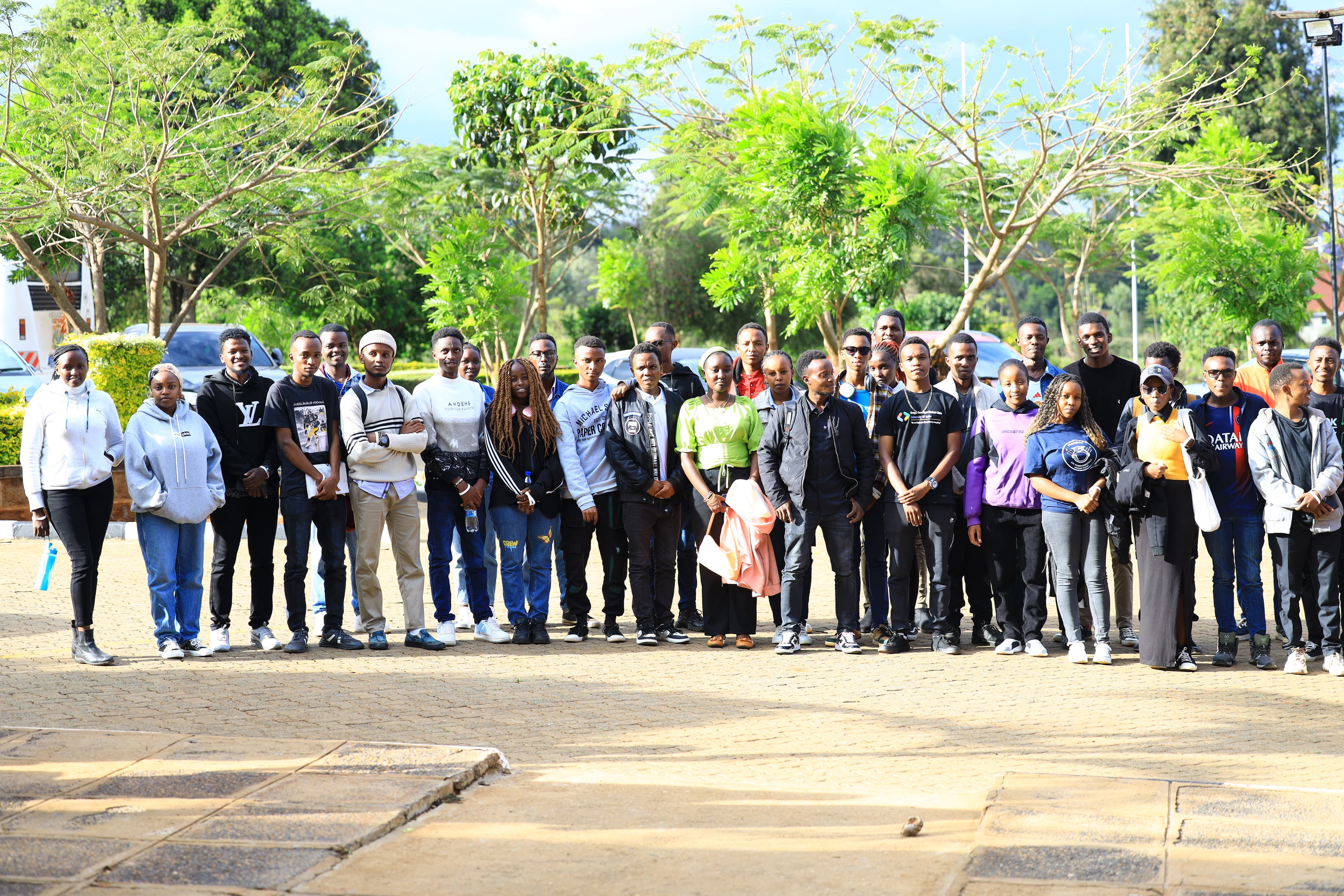
Communities have been everything to me in tech. I'm not exaggerating when I say that without them, I'd probably still be that confused first-year student who thought "hacking" was just typing fast on a keyboard. They've pushed me, supported me, frustrated me, and ultimately shaped me into someone I never thought I could become. This is the story of how I went from being completely lost at a tech event to leading the very communities that once intimidated the hell out of me.
Let me start from the beginning, because every good story needs context for you to understand just how far this journey has taken me.
The Day Reality Hit Me Hard
November 2023. I still get goosebumps thinking about that day when I organised transport for 10 students from my campus to DevFest Mt Kenya at DEKUT. It was literally the first thing I had ever organised in my life, and looking back, I had no business being there. I was this naive first-year student who genuinely believed I was destined to become some kind of elite hacker. Yeah, I know how that sounds now, but at 18, fresh out of high school, I thought I had the tech world figured out.
I held this title, "Cyber Security Lead" at our campus GDSC chapter, which sounds impressive until you realise I had never done a single thing related to cybersecurity. Not one workshop, not one session, nothing. I was living in this bubble where having a title meant I actually knew what I was doing. The reputation I had built at school felt solid, and other students would come to me with tech questions like I was some kind of expert.
Then DevFest happened.
Sitting in that auditorium at DEKUT, listening to developers casually throw around terms I couldn't even spell, let alone understand, was humbling in the worst possible way. These people were talking about APIs, cloud architecture, and machine learning models, and I'm sitting there wondering if "Postman" was actually a person who delivered mail. The presentations might as well have been in a foreign language. Every session made me realise how little I actually knew, how fake my confidence had been.
The ride back to Embu was probably the longest two hours of my life. While other students were excitedly discussing what they'd learned, I was having an internal crisis. All that reputation I'd built? It felt like a house of cards that had just collapsed. I felt like a fraud, and worse, I felt completely lost about what to do next.
The Postman Obsession That Changed Everything
But here's the thing about rock bottom - it gives you a solid foundation to build from. Throughout that entire DevFest event, one thing kept nagging at me. Everyone kept mentioning "Postman" as the event’s sponsor, and they talked about it like it was this amazing tool for API testing. I had no clue what APIs even were, but something about the way people talked about Postman made it sound accessible, even fun.
After the event, I couldn't get it out of my head. I kept thinking about this tool and wondering what I was missing. Then I remembered something - Brian Muchai, the Postman Student Leader at DEKUT, looked familiar. It took me a while to place him, but then it hit me - we went to the same high school! This felt like fate, or at least like the universe giving me a small break.
Reaching out to Brian was terrifying. Here I was, this guy who had just realised he knew nothing about tech, asking someone who seemed to have it all figured out for help. But Brian was incredible. Instead of making me feel stupid for not knowing basic concepts, he actually encouraged me to apply as a Postman Student Leader for my own campus. He told me about the API 101 course and how it could help me understand the fundamentals.
I signed up for that virtual course immediately, and for the first time in months, things started making sense. APIs weren't this mysterious, impossible concept - they were actually logical and useful. The course was structured in a way that assumed you knew nothing, which was perfect for someone like me who literally knew nothing. I spent hours going through the modules, taking notes, and practicing with the Postman interface.
When it came time to hold my first session as part of the application process, I was absolutely terrified. My hands were shaking so badly I could barely hold my laptop steady. I was about to teach API concepts to other students when I'd only learned them myself a few days earlier. But you know what happened? The session was amazing. Students were asking questions, getting excited about building their first API requests, and I could see that same spark of understanding in their eyes that I'd felt when things first clicked for me.
Writing that application report was nerve-wracking, but I poured everything into it - my newfound understanding of APIs, my vision for bringing practical tech skills to our campus, and my commitment to helping other students avoid the confusion I'd experienced. When the acceptance email came through, I literally jumped out of my chair. I was officially a Postman Student Leader, and it felt like my first real achievement in tech.
Watching GDSC Slowly Die (And Deciding to Save It)
By this time, I was juggling two roles - my new position as a Postman Student Leader and my existing spot on the GDSC core team as the Cyber Security lead (still not doing any actual cybersecurity work, but at least now I was contributing in other ways). Being part of both communities gave me a unique perspective on what was working and what wasn't.
The contrast was stark. Through Postman, I was learning practical skills that I could actually use and teach to others. The content was relevant, the community was supportive, and students were genuinely engaged. But GDSC on our campus was struggling. We weren't inactive exactly, but there was this sense that we were just going through the motions.
The problem became crystal clear as the academic year progressed - almost all of our GDSC leads were final year students. While I was getting excited about APIs and community building, they were focused on graduation, job applications, and moving on with their lives. I don't blame them - that's the natural progression. But as someone who was just finding his footing in tech, the thought of losing this community was devastating.
I started noticing things that other people missed. Leads would skip meetings because they had commitments. Events were getting smaller because there wasn't consistent promotion. New students weren't joining because the energy just wasn't there. We were slowly bleeding out, and nobody seemed to care because everyone was already mentally checked out.
That's when it hit me - someone needed to step up, and that someone might have to be me. The thought was terrifying. I was barely keeping up with my own learning, still figuring out basic concepts, and now I was considering taking responsibility for an entire community? But the alternative was watching GDSC die completely, and I couldn't let that happen. Not when I'd seen firsthand through Postman how powerful tech communities could be.
Building a Team Before I Was Even the Leader
March 2024 was when I made one of the boldest decisions of my life. Instead of waiting for the official GDSC lead selection process in September, I decided we needed to start building a new core team immediately. The math was simple - if we waited until September, the current leads would already be gone, and GDSC would be left in limbo for months. We couldn't afford that kind of gap.
I wasn't even officially the lead yet, but I was already thinking like one. The selection process was intense, but not in the way you might expect. I wasn't looking for the students with the highest GPAs or the most impressive GitHub profiles. I was looking for something much more valuable - passion. I wanted people who got excited when they talked about helping others learn, who asked thoughtful questions during our sessions, and who understood that building a community meant we'd all be learning together.
I remember interviewing potential team members and asking them why they wanted to be part of GDSC. Some gave these rehearsed answers about wanting to "enhance their technical skills" or "build their professional network." Those weren't necessarily wrong answers, but they weren't what I was looking for. The candidates who got selected were the ones who talked about wanting to create something meaningful, who shared stories about being confused by tech concepts and wanting to help others avoid that confusion, who understood that leadership in a student community meant being a facilitator, not a know-it-all.
The core team I built became the backbone of everything we accomplished. They became my support system, my sounding board, and the people who kept the community running when I was struggling with my own challenges. Working with this team taught me that the best communities are built by people who complement each other's strengths and cover for each other's weaknesses.
During this transition period, we started organizing Flutter Study Jams across campus, and these became our testing ground. We weren't just teaching Flutter - we were learning how to work as a team, how to coordinate logistics, how to keep students engaged week after week, and how to handle the inevitable technical difficulties that come with any live coding session.
I still remember the anxiety before our first Flutter Study Jam. We'd planned everything meticulously, but I kept wondering - what if nobody shows up? What if the Wi-Fi fails? What if I can't answer their questions? What if we're actually making things more confusing instead of helping? But students started trickling in, and then more came, and before we knew it, we had a room full of people genuinely excited to learn about mobile app development.
Watching students build their first Flutter apps, seeing them get excited when their code compiled successfully, answering their questions and realizing I actually knew the answers - these moments were addictive. Each session built our confidence as a team and proved that we could actually do this. By the time the official transition period came around in September, we weren't just hoping to keep GDSC alive - we had already proven we could make it thrive.
The Interview That Changed My Life
April 2024 brought the interview for the GDSC Lead position, and I've never been more nervous about anything in my life. This wasn't just a casual conversation - this was my chance to officially take responsibility for something I'd already been working toward for months.
I remember sitting in front of my laptop for that virtual interview, trying to balance confidence with humility, explaining my vision for what GDSC could become on our campus. I talked about the Flutter Study Jams we'd already organized, the team I'd been building, and my experience as a Postman Student Leader. I shared my frustrations with the disconnect between what we learned in class and what the industry actually needed, and my belief that student communities could bridge that gap.
The interviewer asked me about challenges I anticipated, and I was honest about them - the difficulty of maintaining engagement, the challenge of teaching concepts I was still learning myself, and the pressure of living up to expectations. But I also talked about why I was willing to take on those challenges, about seeing students get excited about tech concepts, about the potential I saw in our campus community.
The waiting period between April and September felt endless. Every day I wondered if I'd said the right things, if I'd come across as confident enough, if they could tell how much this meant to me. When that acceptance email finally arrived, I read it three times before it sank in. I was officially going to be the GDSC Lead, and suddenly all those months of preparation felt real.
The Recruitment Revolution
September 2024 marked the beginning of what I like to call our "recruitment revolution," though that probably sounds more dramatic than it actually was. We had a new academic year starting, which meant hundreds of fresh first-year students who were curious, eager, and hadn't been discouraged by our campus's previously weak tech culture.
Our recruitment strategy was aggressive but welcoming. We didn't just put up posters and hope people would show up - we went to where the students were. We set up booths during orientation week, we visited first-year classes to give brief presentations, we organized "Introduction to Tech" sessions that were specifically designed for complete beginners. We wanted students to know that GDG on Campus(Structure changed) wasn't just for people who already knew how to code.
The response was incredible, but it also created new challenges. Suddenly we had students with wildly different skill levels all wanting to learn together. Some had never written a line of code, while others had been programming since high school. Some wanted to learn web development, others were interested in mobile apps, and a growing number were curious about AI and machine learning.
We decided to embrace this diversity instead of trying to segment everyone into different skill levels. We introduced new tech stacks that we'd never covered before - AI and ML became regular topics in our sessions, which was both exciting and terrifying because I was learning these concepts alongside everyone else. We organized Cloud Study Jams that introduced students to Google Cloud Platform, hosted Career Tech Talks where industry professionals shared real insights about working in tech, and ran workshops covering everything from basic programming concepts to advanced development frameworks.
The energy was infectious. Students were staying after sessions to ask questions, forming study groups on their own, collaborating on personal projects, and actually building things together. We weren't just a club anymore - we were becoming a real community where learning happened both during formal sessions and in the spaces between them.
DevFest 2024: From 10 to Over 40
When DevFest 2024 was announced, I knew this would be the ultimate test of how far we'd come. The previous year, I'd struggled to convince 10 people to attend. This year, we were looking at taking over 40 students, and they weren't just coming for the experience - they were coming because they were genuinely excited about what they might learn.
The logistics were a complete nightmare. Coordinating transport for that many people, managing registrations, collecting payments, making sure everyone knew what to expect, handling last-minute cancellations and additions - it was like running a small travel agency. But seeing that bus (yes, we could finally afford to rent an entire bus!) filled with excited students from our campus was one of the most rewarding moments of my entire journey.
The difference in our students' experience compared to my first DevFest was night and day. They weren't sitting there confused and overwhelmed - they were engaged, asking intelligent questions, taking notes, networking with other attendees, and actually understanding the presentations. During the lunch breaks, I watched our community members confidently approaching speakers to ask follow-up questions, exchanging contacts with students from other universities, and discussing project ideas with each other.
When we got back to campus, the energy didn't die down. Students were sharing what they'd learned, starting new projects inspired by what they'd seen, and recruiting their friends to join our community. By this time, we had grown to over 500 members, a number that still amazes me when I think about where we started. We weren't just a student club anymore - we were a movement, a family, a platform where students could discover their potential and actually do something meaningful with their skills.
Making It Official: Registration and Real Impact
One of the most important victories we achieved was getting GDSC officially registered with the university by September 2024. This might sound like boring administrative work, but it was actually a game-changer for everything we wanted to accomplish.
Before registration, we were essentially operating in the shadows. We couldn't officially book large venues for events, we couldn't access funding opportunities that were available to registered student organisations, we couldn't rent transport for trips, and we missed out on partnerships with external organisations that only worked with officially recognised groups.
The registration process itself was a masterclass in bureaucracy and patience. There were forms to fill out, constitutions to draft, faculty advisors to recruit, and endless back-and-forth with the student affairs office. But when we finally got that official approval, it opened doors we didn't even know existed.
This official status allowed us to host what became the first-ever student-led tech events at our campus - something that still makes me incredibly proud. We organised the ICP Hubs Kenya Campus Tour, bringing blockchain and Web3 education directly to our students. This wasn't just a one-hour presentation - it was a full-day event with hands-on workshops, networking opportunities, and real industry professionals sharing their expertise.
We also partnered with Moringa School to host a comprehensive Data Science and Cyber Security Workshop. As a Moringa Campus Ambassador (yes, I had started accumulating these titles), I was able to leverage that relationship to bring industry-standard training right to our doorstep. These weren't small club meetings held in empty classrooms - these were legitimate events with proper venues, professional speakers, and students from across different departments attending.
The impact of these events went beyond just the immediate learning outcomes. They showed our entire campus that students could organize meaningful, professional-quality events. They proved that there was genuine interest in practical tech skills. And they established GDSC as a serious organization that other groups and institutions wanted to partner with.
The Hidden Battles Nobody Saw
But behind all these successes, I was fighting battles that nobody could see, and this is the part of the story that I think is most important to share, especially for other student leaders who might be going through similar struggles.
Being a leader meant that people looked up to me, expected me to have answers, and assumed I had everything figured out. The reality was completely different. I was juggling my community responsibilities with a demanding ALX Software Engineering course that required hours of study every day. I was trying to maintain my academic performance, manage my personal relationships, and deal with family issues that would have been challenging for anyone, let alone a student trying to build a tech community from scratch.
Depression started creeping in during the quiet moments between events, when the adrenaline of organising wore off and I was left alone with the weight of everyone's expectations. There were nights when I'd sit in front of my laptop, knowing I had sessions to plan, reports to write, and team members depending on me, but feeling empty inside. The motivation just wasn't there, and the guilt of not being productive made everything worse.
Burnout became my constant companion. I'd wake up exhausted, drag myself through classes, force enthusiasm during sessions, and then collapse at the end of the day, only to repeat the cycle the next day. There were weeks when I considered quitting everything - Community, ALX, sometimes even university itself. The pressure felt overwhelming, and I wasn't sure I was strong enough to handle it all.
Imposter syndrome whispered in my ear constantly. When I was teaching concepts I'd learned just days before, when I was networking with industry professionals who seemed infinitely more knowledgeable, when students asked me questions I couldn't answer immediately - all of these moments made me feel like a fraud who would eventually be exposed.
The hardest part was that I couldn't show this vulnerable side to anyone. My team needed me to be strong and decisive. The community looked to me for direction and inspiration. My family expected me to be succeeding. Admitting my struggles felt like admitting failure, so I learned to hide behind a mask of competence and enthusiasm.
There were moments when that mask almost slipped completely. During particularly stressful periods, I'd find myself snapping at team members, making poor decisions because I was too tired to think clearly, or cancelling important meetings because I just couldn't handle one more responsibility. The people closest to me probably noticed that something was off, but I was too proud to ask for help.
Learning to Build in Public
Through all of this struggle, I learned one of the most valuable lessons of my entire journey: never build in the dark. This lesson came from the tech community itself, and it was revolutionary for someone who used to hide projects until they were "perfect."
Before joining tech communities, I had this mindset that everything needed to be polished and professional before sharing it with others. I'd work on projects alone, never showing them to anyone until I thought they were ready for judgment. This meant that most projects never got shared at all, because they never felt ready enough.
The tech community taught me a completely different approach. People shared their ugly code, their half-finished projects, their failed experiments, and their learning processes. Instead of being judged for these imperfections, they received helpful feedback, encouragement, and collaboration opportunities.
I started applying this principle to our GDSC community. Instead of only promoting events after they were perfectly planned, I'd share our planning process, ask for input from community members, and be transparent about challenges we were facing. Instead of only showcasing successful projects, we created spaces for people to share their work in progress, their learning struggles, and their experimental ideas.
This transparency transformed our community culture. Students stopped being afraid to ask questions because they saw that everyone was learning together. People started collaborating more because they could see where others needed help. Our events became better because we incorporated feedback during the planning process instead of only after the fact.
On a personal level, this principle helped me deal with my imposter syndrome. Instead of pretending I had all the answers, I started being honest about what I was learning alongside everyone else. Instead of hiding my struggles, I began sharing appropriate parts of my journey, which helped other students realize they weren't alone in their challenges.
The Google Recognition
When I applied to be a GDG on Campus Organiser in early 2024, it felt like a long shot. Here I was, a first-year student who had only been seriously involved in tech communities for about a year, applying for a position that would make me an official representative of Google's developer community program at the campus.
The application process was thorough - they wanted to know about my experience leading communities, my vision for tech education on campus, my plans for collaboration with local GDGs, and my commitment to diversity and inclusion in tech. I spent weeks crafting my responses, trying to balance honesty about my relatively short experience with confidence about what I could accomplish.
The waiting period was agonising. Months passed without any communication, and I started assuming I hadn't been selected. I continued with my GDSC leadership, but in the back of my mind, I kept wondering what I could have done differently in my application.
When the acceptance email finally came in August 2025, I had to read it several times before it sank in. Google had selected me to be a GDG on Campus Organizer, which meant our transition from GDSC to GDGoC (Google Developer Groups on Campus). This wasn't just a name change or a bureaucratic shift - it represented recognition of the work we'd been doing and trust in our ability to continue growing the community.

This transition also meant we'd be working more closely with local GDGs, sharing resources and expertise across different types of developer communities. It opened up new opportunities for our students to attend events beyond campus, to connect with working professionals in the tech industry, and to contribute to larger projects that extended beyond our university.
Looking back, this Google recognition felt like validation of a journey that had started with me feeling completely lost at DevFest 2023. In less than two years, I had gone from someone who didn't understand basic tech concepts to someone Google trusted to lead and build communities that would work hand in hand with their broader developer ecosystem.
The Mentorship Gap That Shaped My Leadership
One area where my journey has been particularly difficult is mentorship - or rather, the complete lack of it. I've never had a proper mentor, and honestly, I've become somewhat resistant to the idea because of a painful experience that happened right after high school.
I had identified someone in the tech industry who I thought could guide me, and I reached out with genuine enthusiasm, asking for advice about getting started in technology. Instead of a polite decline or even constructive feedback, this person blocked me without explanation. That rejection left scars, making me hesitant to seek guidance from industry professionals even when I desperately needed it.
Instead of having someone to turn to for advice, I learned to be incredibly resourceful. I found answers through online communities, documentation, trial and error, and countless hours of self-directed learning. While this made me more independent and probably more creative in solving problems, I sometimes wonder how different my journey might have been with proper mentorship.
The lack of mentorship also meant that I made mistakes that could have been easily avoided, took longer paths to solutions that already existed, and struggled with decisions that an experienced mentor could have helped me navigate. There were times when I felt completely alone in my leadership role, unsure if the decisions I was making were right, with nobody to provide perspective or encouragement.
This experience has profoundly shaped how I approach mentorship within our community. Despite not having a mentor myself - or maybe because of it - I've tried to be the mentor figure I wish I'd had for the students in our community. I make myself available for questions, provide guidance and support, share my learning resources, and most importantly, I never make anyone feel stupid for asking basic questions or needing help with fundamental concepts.
I always tell aspiring leaders and students in our community to find mentors, but I also try to prepare them for the possibility of rejection. Don't let one bad experience close you off from the wisdom and guidance that could accelerate your growth, but also don't let the absence of formal mentorship stop you from pursuing your goals.
Creating a Platform for Real Learning
What I'm most proud of in this entire journey is the platform we created for students to learn skills that simply aren't taught in our regular classes. This wasn't just about adding more technical content to people's lives - it was about fundamentally changing how students on our campus thought about technology and their own potential.
When I first started at university, there was this massive gap between what we learned in lectures and what was actually happening in the tech industry. We'd study theoretical concepts in isolation, complete assignments that felt disconnected from real-world applications, and graduate without ever building anything meaningful or collaborative.
Through our community, we were able to bridge that gap. Students learned to work with APIs through our Postman sessions, built real mobile applications during Flutter Study Jams, deployed projects to the cloud through our Google Cloud workshops, and most importantly, learned to work together on projects that actually mattered to them.
But the learning went beyond just technical skills. Students learned to present their work confidently, to give and receive feedback constructively, to collaborate with people who had different skill levels and perspectives, and to persist through frustrating debugging sessions and failed experiments. These are the skills that actually matter in professional environments, and they're almost impossible to learn through traditional classroom instruction alone.
Our community also became a platform for students to showcase their work, connect with opportunities, and build genuine relationships. People found collaborators for hackathons, co-founders for startup ideas, mentors among older students, and friends who shared their interests and ambitions. The networking aspect happened naturally because it was built on shared learning experiences and mutual support rather than transactional exchanges.
We created an environment where it was safe to be a beginner, where asking questions was encouraged, where failure was treated as part of the learning process, and where everyone was expected to help others along the way. This community culture transformed not just individual students, but the entire tech ecosystem on our campus.
Looking around now, I see students who joined as complete beginners leading their own projects, organizing their own events, and mentoring newer members. I see projects that started in our workshops turning into viable products and even small businesses. I see alumni who credit their community experience with helping them land their first tech jobs or get accepted into competitive graduate programs.
Where This Journey Has Led Me
As I write this, reflecting on everything that's happened since that disappointing bus ride back from DevFest 2023, I'm amazed at how much can change in just two years. The confused first-year student who felt like he knew nothing about tech has become someone who leads communities, organizes large-scale events, partners with major organizations, and helps other students discover their own potential.
This journey has taken me into rooms I never thought I'd enter and connected me with people I never imagined I'd meet. I've presented at tech conferences, partnered with international organizations, been recognized by Google as a community leader, and most importantly, helped hundreds of students begin their own tech journeys with more support and direction than I had when I started.
But the real transformation isn't in the titles or recognitions - it's in how fundamentally my relationship with learning and leadership has changed. I no longer wait for permission to start building something meaningful. I no longer assume that someone else is better qualified to solve problems I care about. I no longer hide my work until it's perfect, and I no longer let fear of failure prevent me from trying new things.
The communities that once intimidated me have become the foundation of my growth, and now I have the opportunity to build communities that will hopefully do the same thing for other students who are where I was two years ago - confused, eager, and ready to learn if someone just shows them where to start.
The experience has taught me that leadership isn't about having all the answers - it's about being willing to ask the right questions and work toward solutions alongside other people who care about the same things. Community building isn't about creating perfect events and flawless programs - it's about creating spaces where people can learn, grow, and support each other through the messy, exciting process of discovering what they're capable of.
And perhaps most importantly, I've learned that the best way to overcome imposter syndrome isn't to become an expert at everything - it's to embrace the fact that we're all learning together, and that teaching others is one of the most effective ways to deepen your own understanding.
If you're reading this as someone who feels lost in tech, who doesn't think you belong in these communities, or who thinks you need to have everything figured out before you can contribute, I hope my story shows you that none of those things are true. Communities are built by people who care, not by people who already know everything. Your journey starts with showing up, asking questions, and being willing to learn alongside others who are on similar paths.
The tech world needs more people who are willing to build communities, support beginners, and create platforms for learning that go beyond what traditional education provides. It needs people who understand that the most valuable technical skills are often the ones we learn together, and that the most meaningful projects are the ones that help other people grow.
That's what communities have given me, and that's what I hope to give back through the communities I'm building now.